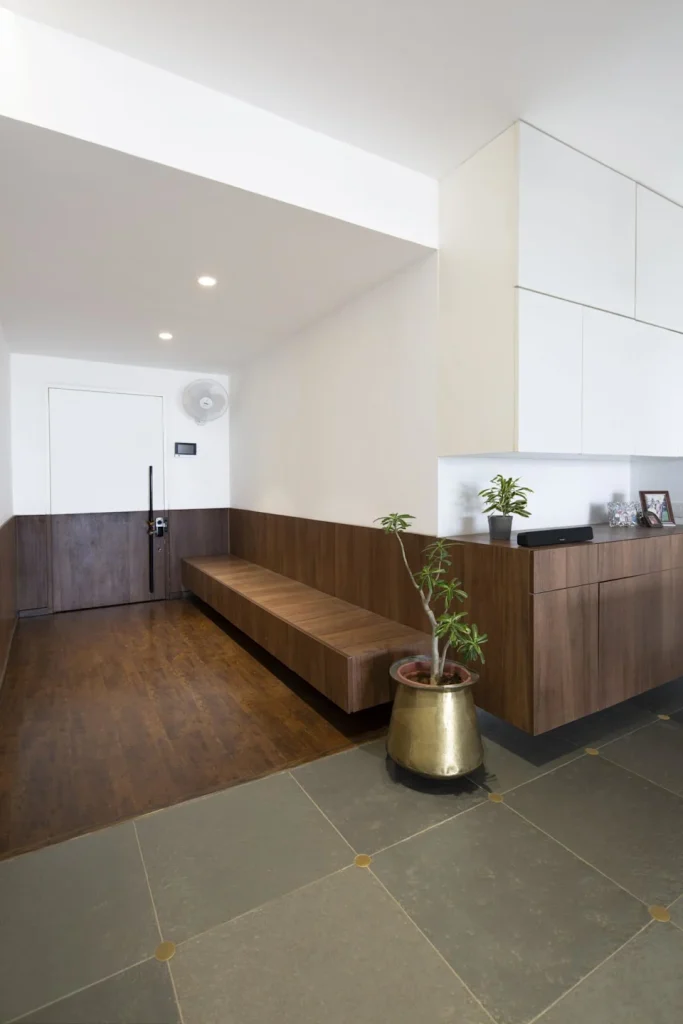
True spiritual abundance in living is not defined by material excess, but by an intentional lifestyle that pares away the non-essential to uncover simplicity and depth. In India, where domestic aesthetics are traditionally steeped in vibrant palettes, intricate ornamentation, and sensory abundance, practicing modern minimalism presents a unique challenge.
Tackling this dichotomy, Hyderabad-based architectural studio Design Experiment embarked on an exploratory design journey for a retired couple hailing from the Rayalaseema region. By striking a delicate equilibrium between bare-bones architecture, functional furniture, and regional heritage, the designers proved that a minimalist interior does not have to feel cold or sterile—it can be deeply tactile, authentic, and emotionally resonant.
The Vision: Simple Living Grounded in Cultural Roots
The homeowners sought a tranquil sanctuary that embraced modern simplicity while honoring the cultural memory and ancestral heritage of their native Rayalaseema roots. Rather than adopting a clinical, Western-style “white-box” minimalist layout, the design team embraced a vernacular philosophy: distilling traditional craft down to its purest geometry while allowing raw, honest materials to set the emotional tone.
Architectural Highlights & Design Strategies
1. Vernacular Materials and Earthy Textures
Instead of glossy, industrial finishes, the home draws warmth directly from the native landscape:
- Kadappa Stone & Brass Accents: Deep, natural Kadappa black stone anchors the flooring, inlaid with subtle brass coin details—a direct nod to heritage flooring techniques that cool the interior in hot southern climates while offering an understated patina.
- Warm Timber & Natural Weaves: Natural teak joinery, unpolished wood framing, and tactile woven textiles soften the clean architectural lines, creating visual warmth without clutter.
2. Curated Heirlooms as Focal Points
Minimalism often errs on the side of discarding personal history, but this residence uses spatial restraint to celebrate it:
- Ancestral Art & Artifacts: Family heirlooms and vintage brass antiques passed down across generations are given dedicated focal positions against neutral, textured backdrops.
- Functional Artistry: Traditional architectural motifs are reinterpreted through contemporary millwork, allowing historic craft to serve practical daily routines rather than remaining passive museum pieces.
3. Passive Light and Climate-Conscious Airflow
The residence leverages traditional spatial arrangements to enhance environmental well-being:
- Natural Cross-Ventilation: Strategic window placements and semi-open partitions facilitate cross-breezes, mitigating indoor heat naturally.
- Dynamic Interplay of Light and Shadow: Recessed openings filter harsh midday sun into gentle ambient light, allowing daylight shifts to enrich bare walls throughout the afternoon.
A Lesson in Warm Minimalism
This Hyderabad residence illustrates that minimalism is not a rigid formula of blank walls and empty surfaces. By treating local culture as an active design ingredient rather than an afterthought, Design Experiment demonstrates how modern restraint and historic regional identity can coexist. The result is a home stripped of superficial distraction, grounded in place, and rich in everyday peace.